Article from *El Pueblo de Ceuta*, written by: Gabriela Sardá
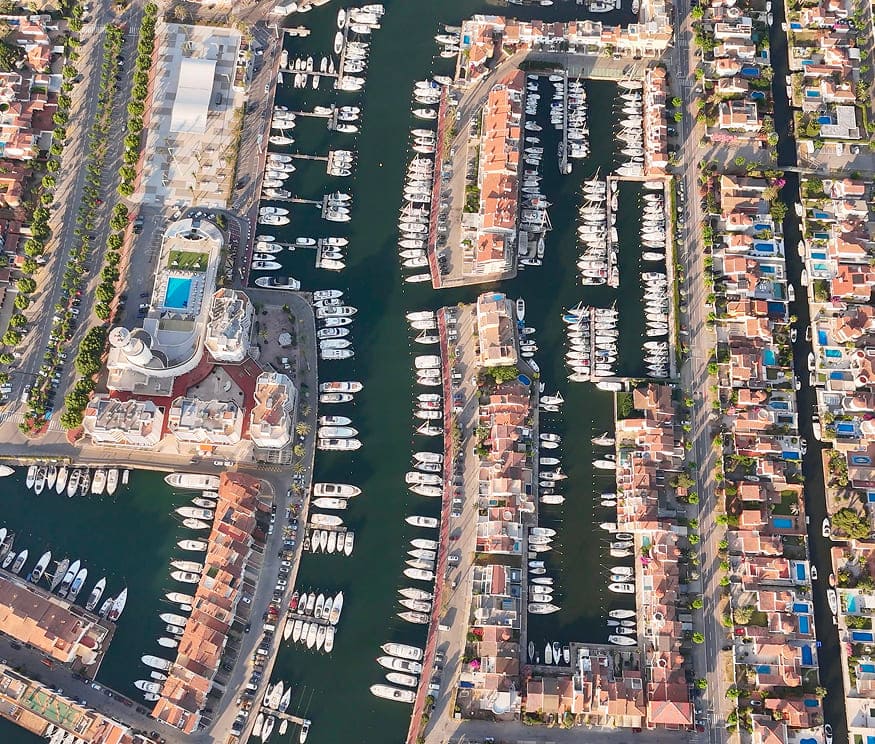
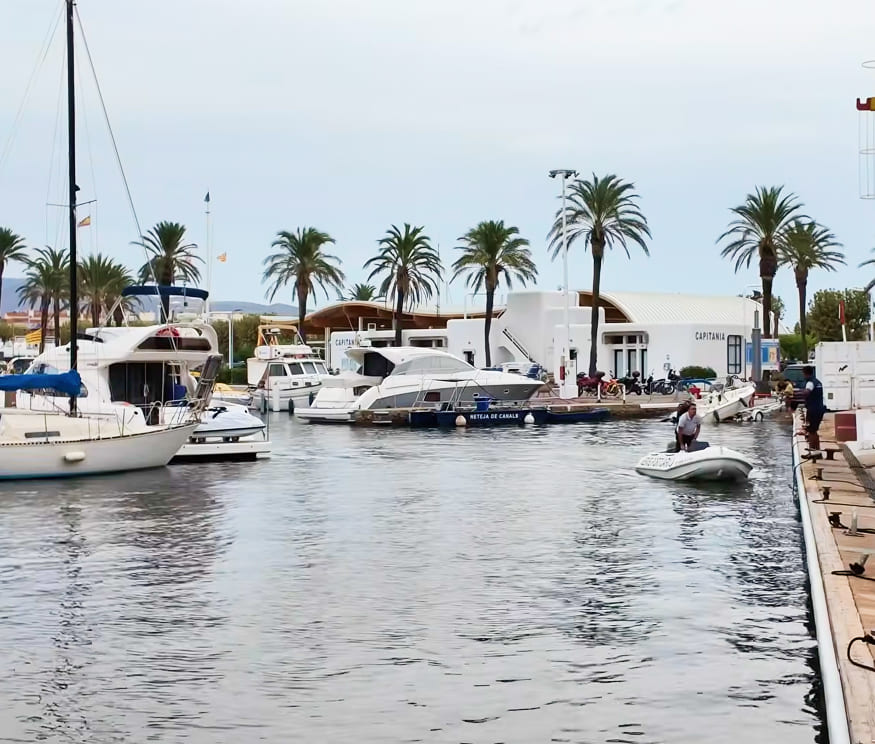
José Manuel Arrojo is the CEO of Nauplia Capital, which holds the concession for Marina Hércules through 2051, and he says they are currently operating “very close to normal” levels—as they were before the “invasion.” The investment of nearly 7 million euros remains in place.
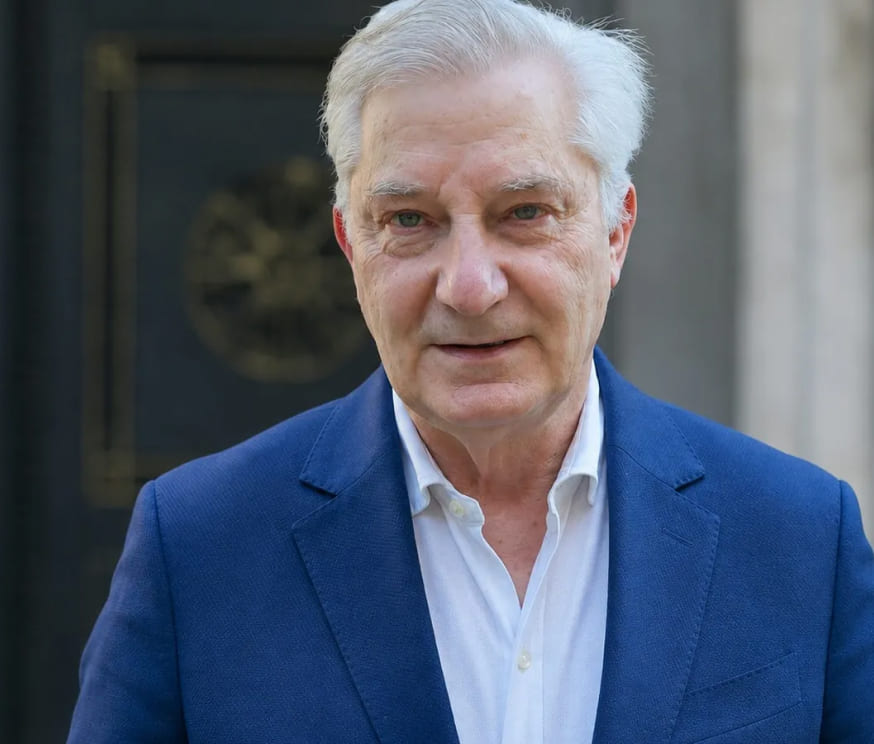
Ceuta/ José Manuel Arrojo likes Ceuta. He says so at the beginning of the conversation and repeats it, in one way or another, throughout the interview he grants to El Pueblo de Ceuta to outline the future he envisions as an investor in the city following the Moroccan invasion. The president and CEO of Nauplia Capital, the company that manages the Marina Hércules marina, arrived in the city in 2024, when the company acquired 100% of the facility’s shares with the intention of undertaking a “profound transformation.”
Since then, the company has renewed a significant portion of its workforce, improved its services and infrastructure, and developed an ambitious investment plan to transform the marina into one of the city’s leading tourist attractions. To date, it estimates an investment of more than one million euros, a figure that will continue to grow. The company has secured the funds to carry out a project worth over six million euros, and with a new concession pending finalization, that investment could rise to 7.5 million. All that’s missing is the building permit. The events of July 30 in Tarajal have not dampened his enthusiasm or that of his team. “Our commitment is just as strong—if not stronger—than before,” he says.
Q: What is your connection to Ceuta? How did it all start?
A. I had never been to Ceuta until, through a connection of one of my partners, I was introduced to someone who asked me if I was interested in the port of Ceuta. At that time, we already had five or six ports, so I told him I’d have to look into it.
At that time, I was in Ceuta and met the previous owners of the marina. The truth is that the marina was in dire need of attention, but it had a lot of potential. We reached an agreement in 2024 and acquired 100% of the marina’s shares, then developed a plan—as we do with all the marinas we acquire—to substantially improve it in every respect. In terms of infrastructure, in terms of staff—which also required a great deal of attention—and in terms of users, for whom I believe the service was insufficient or subpar.
I met with the users’ representative, and we reached an agreement. And the key factor—which I think was a wise move—was bringing Mehdi on board as port director. Aside from his background, he’s a guy with a lot of drive—which is exactly what I needed. So my first visit was to get to know the port and meet with the previous owners, and then I traveled there numerous times. I made two more trips before we finalized the deal, and since then I’ve been going practically every month. And then, once Mehdi took over, I’ve traveled there quarterly to meet with the Port Authority, which I must say has always supported us and has been truly instrumental in making things easier for us to carry out the project.
And then with the mayor and the entire team. With the various council members, with whom we’ve also had a very close and collaborative relationship. We’ve always felt very well treated in Ceuta, and in return we’ve committed to an investment project to completely transform the port. We believe the port is one of the city’s calling cards. There’s the commercial port side and then the tourism aspect. Moreover, it attracts tourists with higher-than-average purchasing power. We wanted a port that lives up to what Ceuta deserves, and that’s what we’re working on.
Q. And up until now, before the crisis, what had been achieved at the Port of Ceuta in terms of human resources, infrastructure, and customers?
A. We’ve practically replaced the entire crew; we’ve hired a new shipyard manager, a second-in-command, a chief mate, and an administrative director, and we’ve replaced practically all the other sailors. And the director, too. In other words, it’s been a complete overhaul, and I think a radical change from what the customers are used to.
There was a controversy over how fees were being set—how they were being charged month by month based on measurements taken by length, beam, and so on—and we reached an agreement to amend the concession agreement to set fees based on berths and to establish a transition period between the old system and the new one. That helped us calm the situation. We also reduced the parking fee to make it more accessible for them. And then we’ve been making some infrastructure improvements, especially at the dry dock; we’ve purchased a new travel lift, since the old one was causing a lot of problems.
We have also purchased a forklift to lift the boats and move them around the dry dock. We have reached agreements with the CAS. It’s still in the works, but we would like the CAS (Real Club Náutico) to be the one to coordinate all the recreational boating activities that we promote. This way, we can take advantage of the fact that we’re neighbors and allow our members to use their facilities if they’re interested. We’ve collaborated with the Madrid City Council on a campaign to bring boats passing through from the mainland to Ceuta.
We have reached agreements with all the ports in the Southern Mediterranean to organize regattas and rallies.
Q. You’ll be arriving in Ceuta in 2024, at a time when the Autonomous City has been focusing on nautical tourism for years as part of its goal to diversify the economy. And then, suddenly, on July 30 of this year, what happened happened. How did you realize the magnitude of what had just taken place?
A. This has been a shock. As a Spanish citizen, seeing your country’s borders violated and large numbers of people entering indiscriminately and unchecked is a feeling that starts with shock and then turns to disbelief at how the Spanish government has failed to take the appropriate measures to prevent this. At the very least, now that it has happened, they should ensure that all illegal immigrants are removed from Ceuta.
There are now many more law enforcement officers on the streets, yet undocumented immigrants are still on the beaches, in stores, and camping out on the streets. There are facilities designed for these circumstances that are not being used. It really is a situation that combines surprise with disbelief at the lack of a response commensurate with what has happened.
Q. — And as for the port and all its pending projects, does this mean they’ll be put on hold, or do you plan to resume everything as soon as things return to normal?
A. We’re making a 25-year investment in the ports. Our concession runs until the year 52. So we have 26 years left. Our commitment is just as strong—if not stronger—than before. And, in fact, aside from the port, we have new projects we’d like to carry out within the city, and we’re going to commit to them. I believe we cannot ask the city to do more than it has already done, because it’s beyond its control. But it’s important to resolve this situation for the future—for the well-being of Ceuta’s citizens.
As a port, we stepped up security to prevent irregular immigrants from flooding in and to ensure none entered. We had a few transit cancellations—which is normal in light of the news—but operations resumed immediately. In other words, the port is—if not operating exactly as it did before the influx—very close to normal. For our part, as businesspeople and as the port’s developers, what we want is to complete our project.
Well, we want to get started. We’re just waiting for the city council to finally issue us the construction permit. We’ve been waiting a long time, but we have a truly transformative project, and we’re going to build a landmark structure in the city of Ceuta and completely transform the port.
All we need is a permit. We have all the funds ready to be invested and to carry out the project we have already presented.
Q. — So what’s 100% on track then?
A. 100%, and if we can secure any more concessions, we’ll do so.
Q. — How much have you invested so far?
A. Our investment exceeds 6 million euros. And if we combine it with another concession we’re awaiting, we’ll likely reach approximately 7.5 million. In 2024, we invested nearly one million euros. The thing is, what we’ve done is improve what’s already there, but not transform it. The 6 million will transform the port.
We now have 5,000 square meters of marketable retail space. We signed leases with the tenants a year and a half ago. The entire building is pre-leased, and we have pre-leased most of the retail spaces we plan to build.
There’s a lot of interest because it’s a prime location in the city. We’re just waiting for the building permit so we can get started as soon as possible.
Q. — And what can you tell us about that new concession that’s still pending?
A.— I can’t tell you that because it would violate confidentiality. But it would be something that complements what we’re doing now very well and would allow us to bring about an even greater transformation than we had planned.
Q. Finally, as businesspeople who invest in Ceuta, what do you expect from the government in terms of security and guarantees?
A. We know that the autonomous city has jurisdiction that extends to the local police. The National Police and the Civil Guard report to the Ministry of the Interior, and the Army reports to the Ministry of Defense.
We can ask the city for what it can give us—what it has always given us. What we do ask of them, however, is that they take steps with the heads of the relevant ministries to permanently strengthen security—of course, at the border. What cannot happen is having an eight-meter fence, only to find that when you reach the Tarajal border, everyone just slips through.
I had planned for an investment so that, instead of building that sort of plastic barrier, it would have been a solid one. Let’s make those investments happen. This is my personal opinion as a citizen; regardless of anything else, I believe that in a situation where your territory is being invaded, the military has to intervene.
The Army is committed to defending Spain’s territorial integrity, but it has failed to do so because its commanders have not risen to the occasion. Therefore, the city has the responsibility to work with the relevant ministries to agree on additional resources and a protocol for action to prevent this from happening again, because the truth is that this looks like it could happen again at any moment. So the key is to take preventive measures.